
Primary sources, traced to the root
The American Revolutionary War
VantagePoint is a research corpus and method for Colonial and Revolutionary America. Every claim either resolves to a named source or is marked as one that does not.
The firewall is the product. Most research tools return what looks relevant. VantagePoint returns what can be documented, and tells you which is which. Every factual claim resolves to one of three honest states: documented, not documented, or not asserted. A high count of matching lines is not a verdict. A footnote to another historian is a lead, not a source.
Built for the period, not adapted to it. Searches run in period vocabulary, period spelling, and the artifacts that optical character recognition leaves behind — connexion, enquiry, publick, the long s. Period terms are read in their period meaning. The corpus is searchable on its own terms rather than through modern ones.
Scale earns its place in one specific way. It finds the candidates. Approximately twenty-six billion words of period text will surface documents, phrasings, and connections, and every one of them is then read at the page before it becomes a finding. The corpus proposes; reading decides. When those two disagree, reading wins, and the disagreement is recorded.
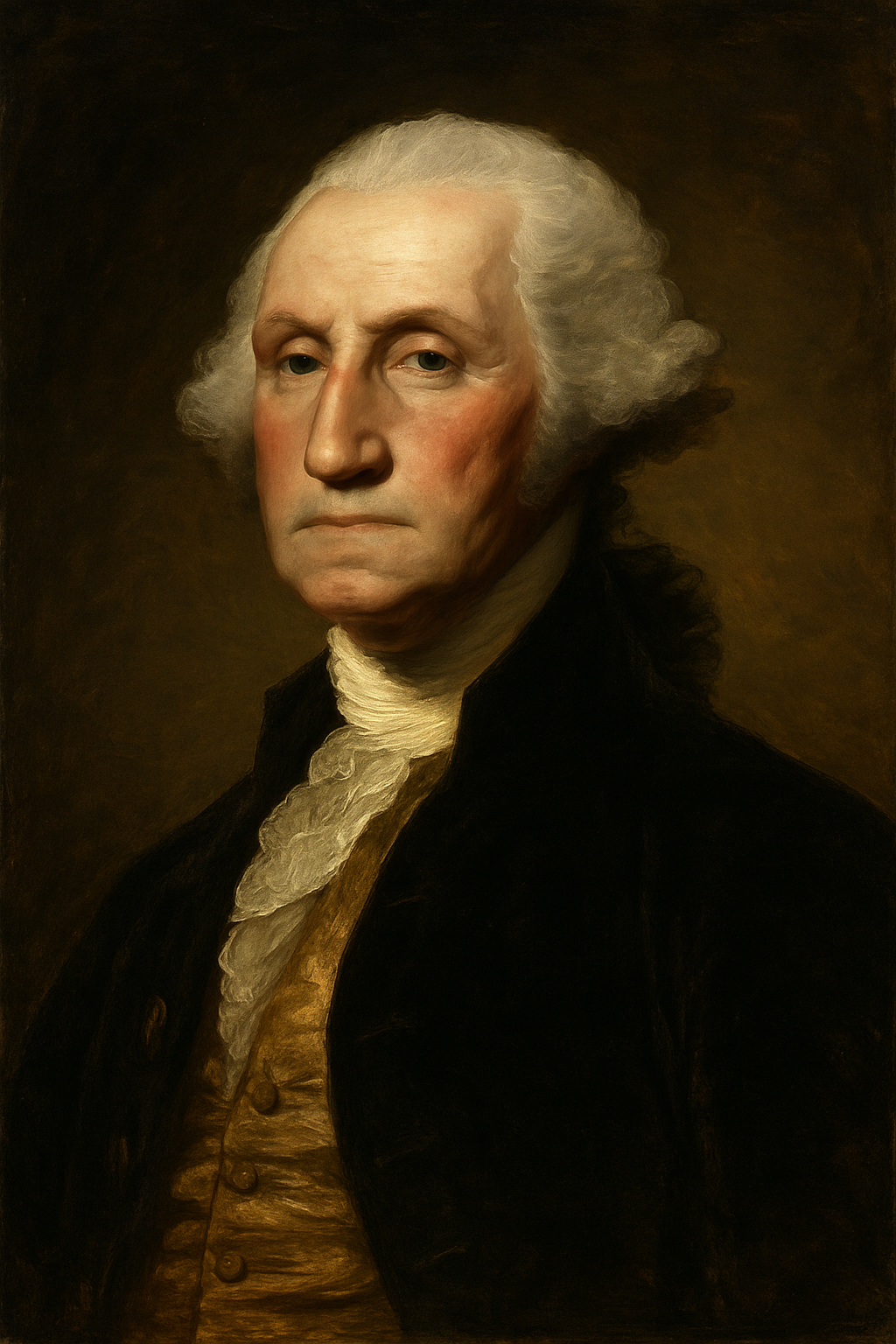
Gilbert Stuart (American, 1755–1828), George Washington, oil on canvas, painted in Philadelphia, 1795. Known as the Vaughan type after Samuel Vaughan, the merchant who owned an early version of the composition. Collection of the National Gallery of Art, Washington, D.C. [accession number: 1979.5.1.]. Public Domain
About VantagePoint
VantagePoint is the work of Scott Place, an independent historian and corpus architect based in Beaufort, North Carolina.
The project began with a problem familiar to anyone who has worked in Revolutionary-era sources: the traditions are well told and thinly documented. A story repeated in a dozen respectable books can turn out, when the citations are followed backward, to rest on a single nineteenth-century assertion that the next writer took on trust. Following those chains by hand means finding the volumes first, and the finding is most of the work. A corpus of period text puts the candidates in front of you in an afternoon; reading them at the page is what turns a candidate into a finding, and that still takes as long as it takes. What changes is that multiple works spanning a century and a half can be held open at once, in one register, with every claim carrying its tier and every correction recorded.
That is the whole of the idea. Not a tool that answers historical questions, but an evidence base disciplined enough that a historian can answer them, and show the work.
The method is applied to a book in progress, The Forge, and to episode studies in the Revolutionary period. It is available to institutions as corpus construction, as commissioned research, and — increasingly the part that matters most — as training in the curation discipline itself.
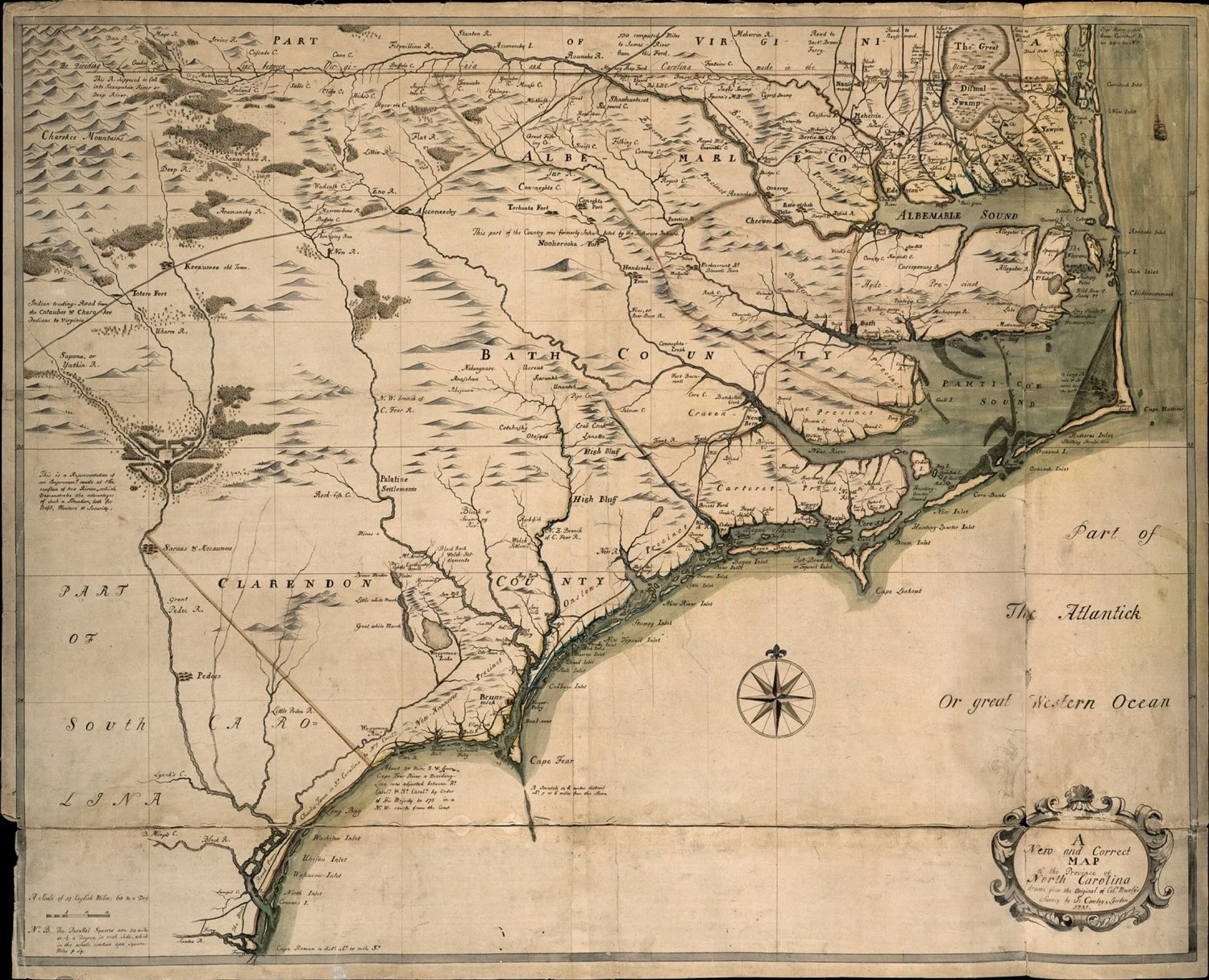
Edward Moseley, A New and Correct Map of the Province of North Carolina, 1733. Library of Congress. Public domain: published before 1930.
Method
Demonstration, not assertion.
Five disciplines govern the work. They are stated here because a method that is only described when asked is not a method.
Investigation, not thesis. Work begins from a question — a battle, a figure, a single episode — never from a conclusion in search of support. A hypothesis may be advanced in order to test it. Verdicts come only after the evidence chains are anchored.
The evidentiary firewall. Every factual claim resolves to one of three states: documented, not documented, or not asserted. The historian adjudicates; the software proposes. Three working principles carry most of the weight. Silence is a finding, not a disproof — an empty confirming lane is a real result, and it cannot disprove something that by design would leave no record. Counts are not votes — a high tally of matching lines is not a verdict, and a documented label must name a primary source. And every claim traces to its primary root, because secondary works citing one another can look like independent documentation and are not; where the chain cannot be completed, we say so.
The lexical lens. Searches use period vocabulary, spelling, and OCR artifacts, and period terms are read in their period meaning. The lens cuts both ways: recall, so that what is there is not missed, and anti-anachronism, so that what is not there is not over-read.
The corridor — writing from inside the moment. The narrative stays within what was known and believed at the time, without hindsight. It operationalizes a discipline Barbara Tuchman articulated and exemplified; the framework and its structure are ours.
Demote, don't erase. A claim that fails is relabelled to its honest status, with the source it would predict if it were true. It is not deleted. Failing to prove a thread is itself a recorded result, and a verdict that is accidentally right is still outside the firewall. When evidence changes a finding, the change is recorded rather than overwritten — what the claim used to say, when it changed, and what was wrong with the original reasoning. A register that quietly replaces one verdict with another is asserting the new one; showing the change demonstrates the method.
Provenance
Public-domain status is determined, not assumed, and rests on one of five recognized bases: expired term, federal government work, edict of government, non-renewal, or publication without notice.
A determination attaches to a specific volume or issue rather than to a title or a publisher, because serial runs change status mid-run.
Determinations are recorded as they are made. Where a source has not yet been adjudicated, that is its recorded state.
Public-domain coverage is stated as a floor with a standing audit, never as a point estimate. Part of any corpus of this kind carries no machine-readable imprint date and can only be verified by opening it. A standing audit in 2026 identified a concentrated body of later material in one collection track, and it is held for adjudication imprint by imprint. A uniform purge by date would have removed census volumes and court reports that are federal works and edicts of government and are in the public domain on those bases — so it was not done.
That is what a standing audit looks like when it is real. The alternative — a compliance claim enforced once at load time and never tested — is the failure this discipline exists to prevent.
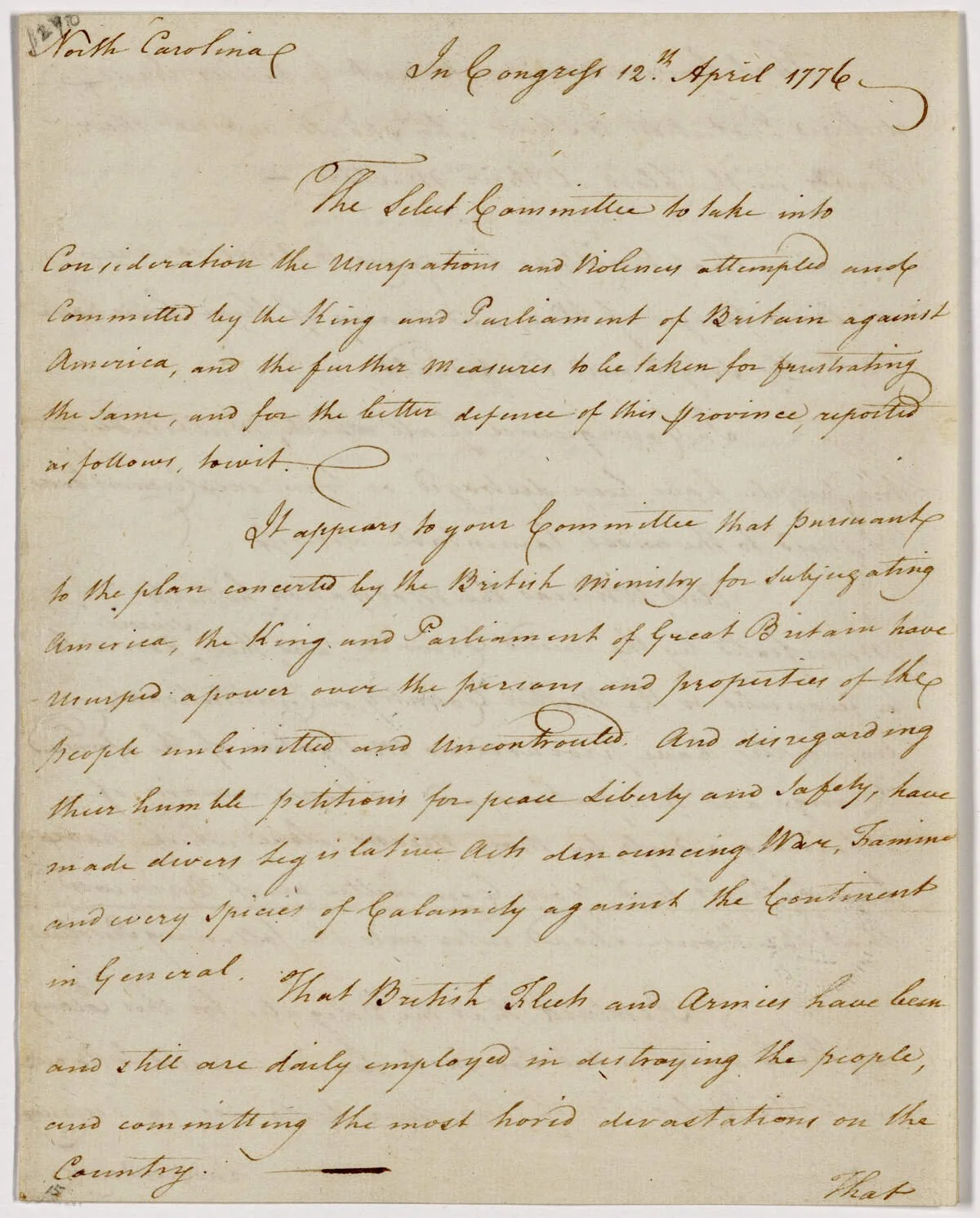
The original Halifax Resolves adopted April 12, 1776 in Halifax, North Carolina, North Carolina State Archives. Public domain.
The Forge
Washington as an intelligence commander — and the multi-front, asymmetric threat to his command in the winter of 1777–1778.
The word forge can be a noun or a verb. As a noun, it is a furnace where metal is heated. As a verb, it means to shape metal by heating and hammering, to make a tool or weapon.
The Forge is a book in progress about George Washington's development as an intelligence commander, and about the period between late October 1777 and May 1778 when his position was least secure. The book argues that the strategic ferocity of Washington's response in those months is frequently misread — treated as disproportionate to a threat that, in the traditional telling, never quite materialized.
That winter has been told many times. The traditional account turns on a conspiracy whose central evidence, followed backward, thins out considerably.
The book is written under the disciplines described on the Method page. Where the evidence supports a claim, it is documented and the source is named. Where it does not, that is stated plainly, and the absence is treated as a finding rather than a gap to be filled.
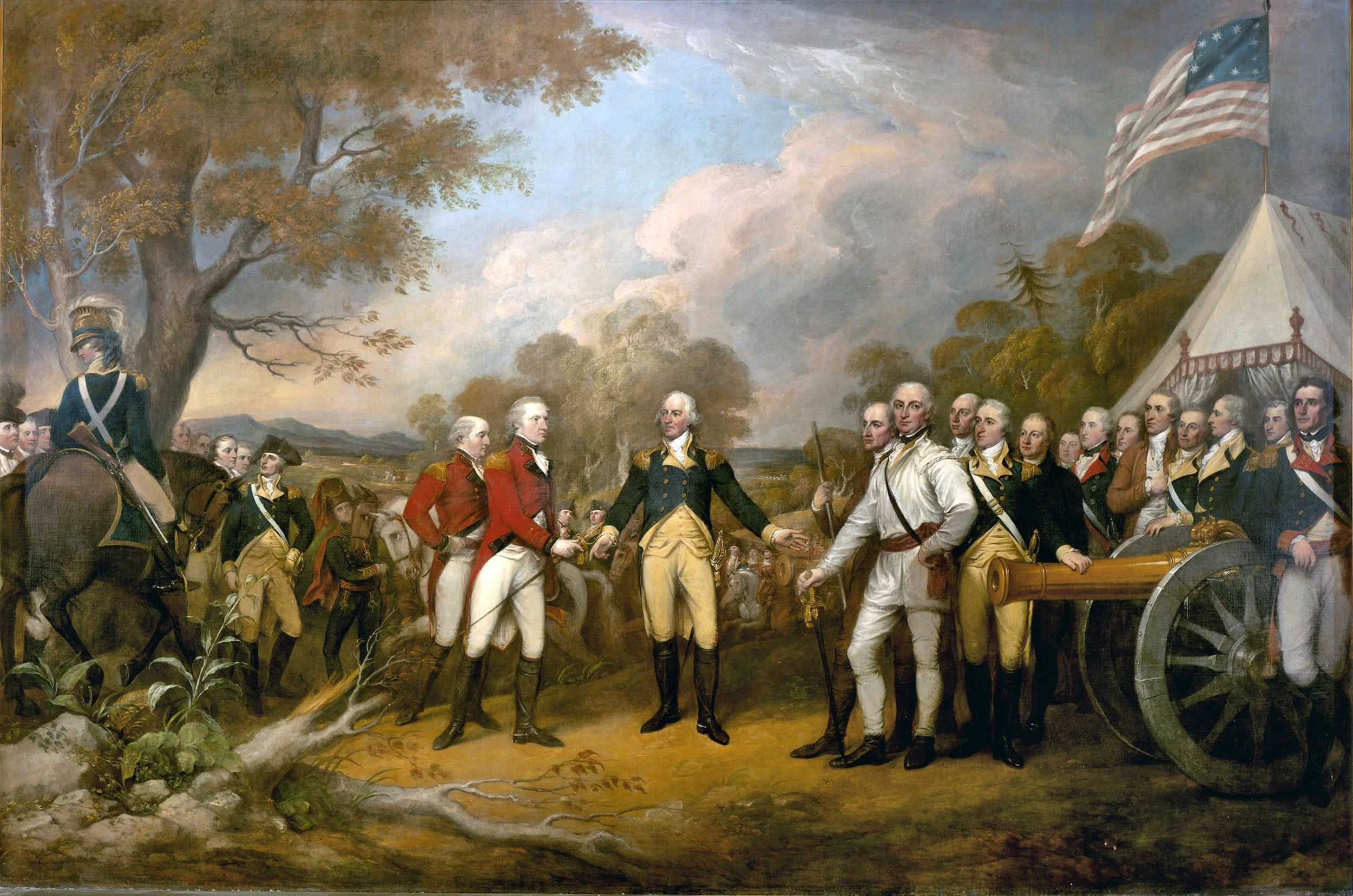
John Trumbull, The Surrender of General Burgoyne, 1821. United States Capitol Rotunda; commissioned by Congress, 1817. Public domain: published before 1930.