
The Forge
Washington as an intelligence commander — and the multi-front, asymmetric threat to his command in the winter of 1777–1778.
The word forge can be a noun or a verb. As a noun, it is a furnace where metal is heated. As a verb, it means to shape metal by heating and hammering, to make a tool or weapon.
The Forge is a book in progress about George Washington's development as an intelligence commander, and about the period between late October 1777 and May 1778 when his position was least secure. The book argues that the strategic ferocity of Washington's response in those months is frequently misread — treated as disproportionate to a threat that, in the traditional telling, never quite materialized.
That winter has been told many times. The traditional account turns on a conspiracy whose central evidence, followed backward, thins out considerably.
The book is written under the disciplines described on the Method page. Where the evidence supports a claim, it is documented and the source is named. Where it does not, it is stated plainly, and the absence is treated as a finding rather than a gap to be filled.
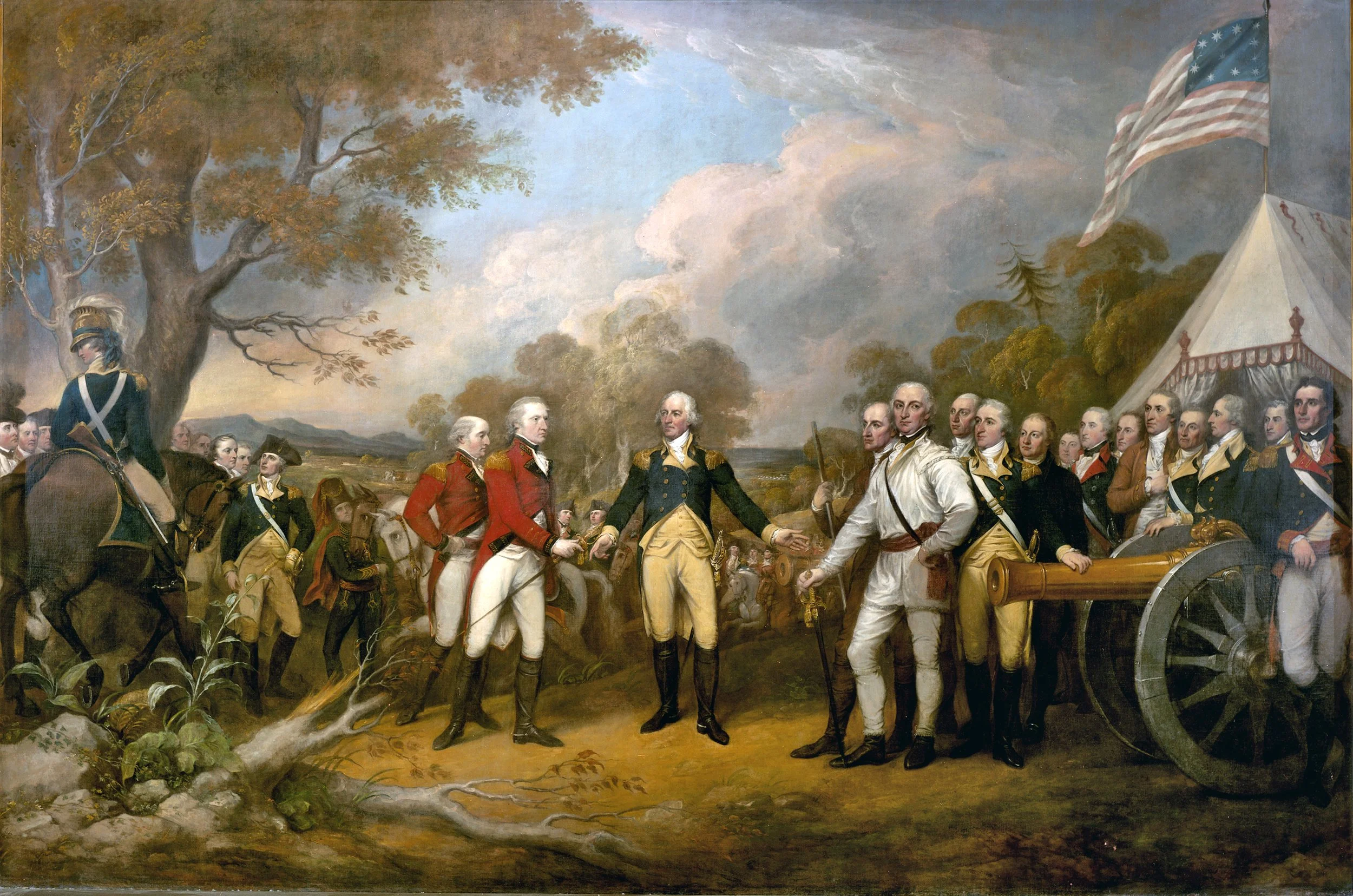
John Trumbull, The Surrender of General Burgoyne, 1821. United States Capitol Rotunda; commissioned by Congress, 1817. Public domain: published before 1930.